
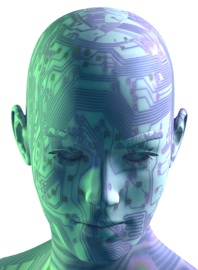
Two powerful and parallel trends are underway in marketing.
First, marketing is becoming more human. This is the social media revolution. Blogs, Facebook, Twitter, LinkedIn groups, etc., are thriving with real dialogues, between real people in organizations and real constituents in the market.
This pushes marketing as a whole to be more real — customers aren’t abstract models on a whiteboard, but splendidly diverse individuals with emotions, opinions, and microphones. What used to be a novel concept, so-called “voice of the customer”, is becoming an integral part of everyday marketing.
Second, marketing is becoming more computerized. A veritable tsunami of new marketing software has arrived — with more on the way — as a result of 7 converging forces:
- largely digital channels of communication to the market;
- cloud computing and on-demand software-as-a-service;
- an explosion data and analytics on customers and markets;
- open APIs for everything from ad networks to CRMs;
- the emerging semantic web (a.k.a., a “web of data“);
- a new generation of AI-like algorithms at the intersection of computer science + economics + marketing;
- ever cheaper and faster computing power and networking;
This is enabling many of the ideas around marketing automation and computational marketing. These technologies change the scale at which marketing programs can operate — huge numbers of smaller atomic elements — allowing thousands of micro-segments of audiences to be tracked and engaged, in some cases down to one-to-one personalization and offer optimization.
But… how do these two trends affect each other?
Social media communities quickly reject “automated” participation (see David Armano’s excellent post, how to be more human).
And marketing software still lacks human intuition and creativity — and will until the singularity.
Marketers must be the bridge between these two engines of innovation, and the wide range of possibilities for how to do that represents a wealth of strategic marketing choices.
A beautiful paradox of how marketing will be both more human and more computerized.
Get chiefmartec in your inbox
Join 42,000+ marketers and martech professionals who get my latest insights and analysis.